Details waiting beyond the obvious
Some of the most memorable garden moments are small: a tile under a fern, a word carved on the back of a step, a sculpture that makes sense from only one spot. These are notes on hiding them well.
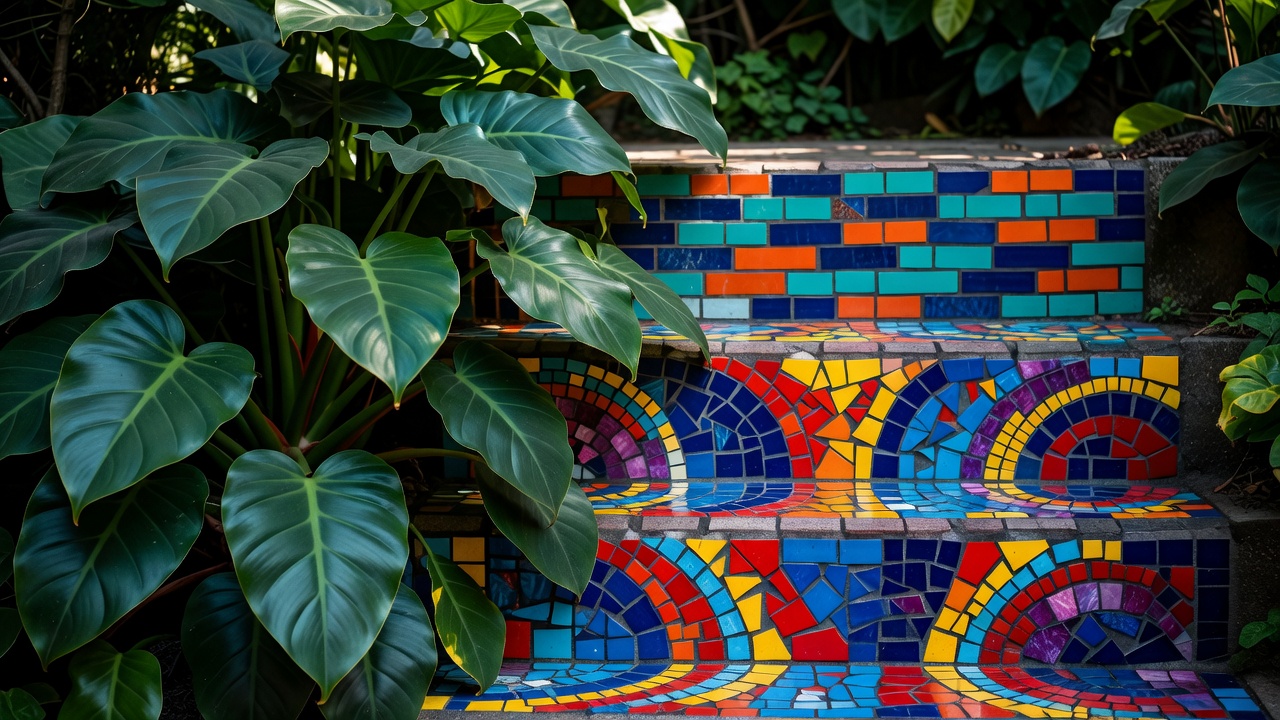
Lessons from imaginative gardens
Several celebrated gardens show how far concealment and surprise can go. In the cloud forest above Xilitla, Mexico, the English poet Edward James built Las Pozas, a sprawl of surreal concrete stairways and columns that emerge from tropical vegetation. In Chandigarh, India, Nek Chand's Rock Garden turns broken ceramics and recycled materials into thousands of figures discovered along narrow, twisting routes.
In Tuscany, Niki de Saint Phalle's Tarot Garden glitters with mirrored mosaic, and in California, Ganna Walska's Lotusland includes a working topiary clock and gardens designed to unfold room by room. In Scotland, Charles Jencks's Garden of Cosmic Speculation, opened to visitors on limited days through Scotland's Gardens Scheme, weaves mathematics and physics into landforms and sculpture.
The common thread is not budget. It is intention: every hidden element rewards the person who slows down.
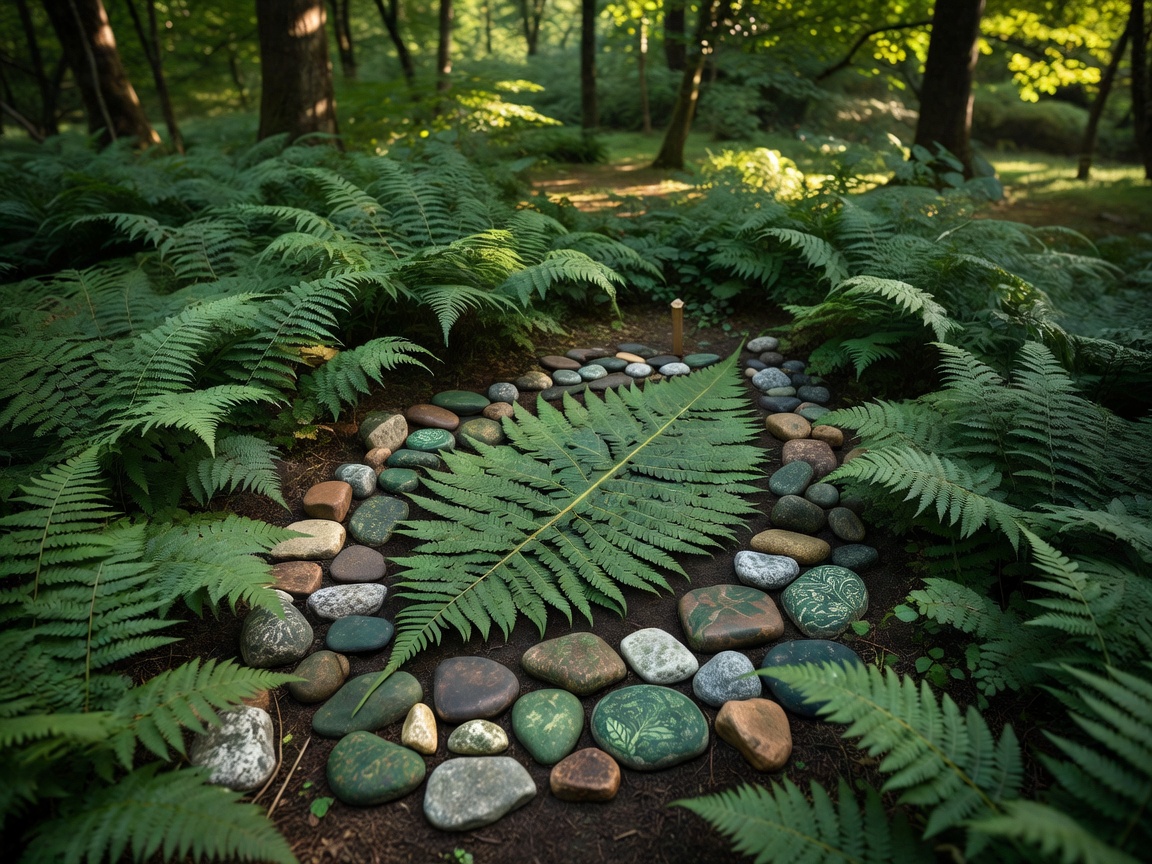 Anamorphic
One-point pictures
Paint or place fragments across a bed so they align into a shape from a single marked stone. Use pale colours against dark mulch for contrast.
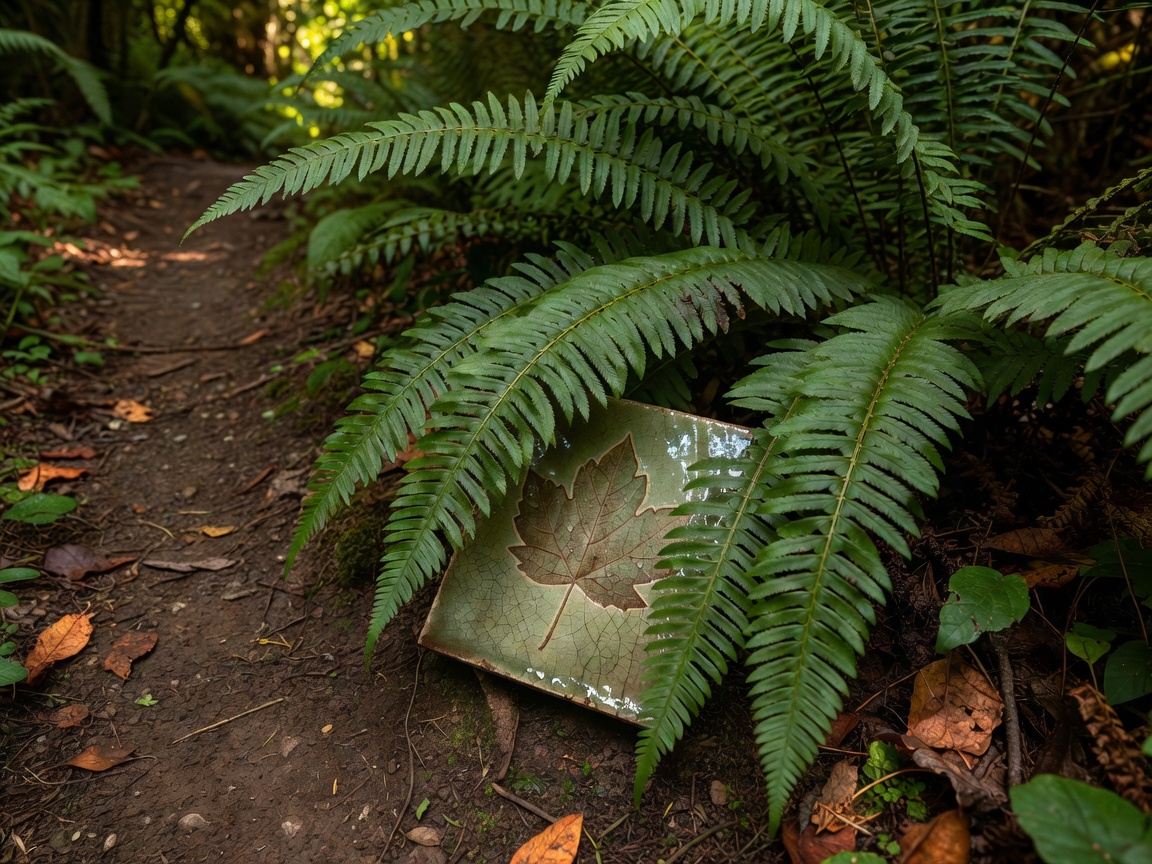 Mosaic
Tiles beneath fronds
Set frost-proof glazed tiles into path edges where foliage will partly cover them. Visitors spot them as leaves move in the breeze.
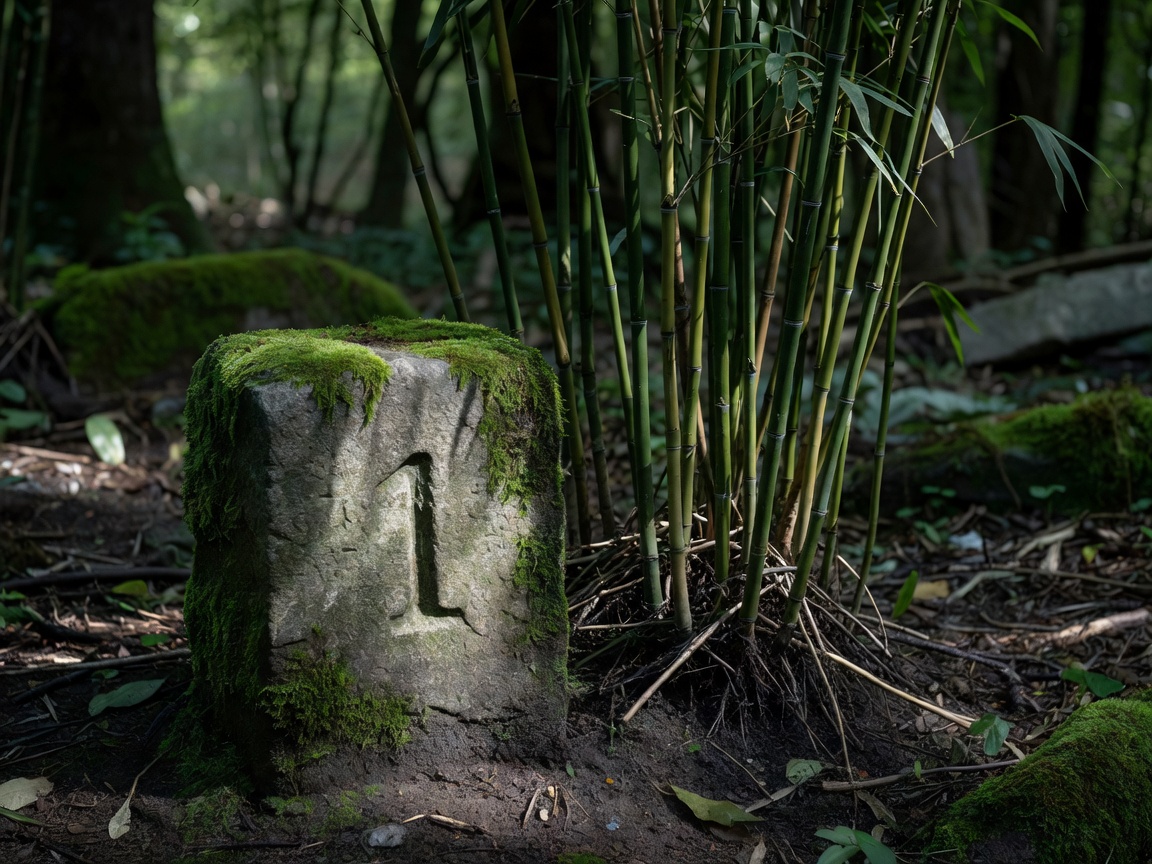 Clue trail
Number and word trails
Carve letters or numbers into stones hidden around the garden. Collected in order, they form a word, a date or the answer to a riddle.
Materials for heat, rain and sun
Humidity and intense ultraviolet light are hard on outdoor art. Choose high-fired, fully glazed ceramics and porcelain mosaic, stone, marine-grade 316 stainless steel, bronze and cast concrete. Avoid untreated mild steel, which rusts quickly, and paints not rated for exterior use. If you use timber, choose certified sustainably harvested wood and lift it off the soil to discourage termites.
Set mosaics on a well-drained concrete base with exterior-grade adhesive and grout, and allow a slight fall so water runs off. Moss and algae will soften edges over time; some gardeners love that patina, but a soft brush twice a year keeps colours legible.
Designing the discovery
A hidden detail needs a hint, or it remains invisible forever. Offer a quiet clue: a change of paving that leads toward it, a bench facing it, or a single line on a garden map for guests. Think about who will find it. Children notice things at knee height; adults notice what sits at eye level near a pause point.
Plan for growth. A tile that is charmingly half-hidden in year one may vanish under a philodendron in year three. Mark each installation on your garden plan with the plant that frames it, and prune that plant with the detail in mind.
- Brush algae from mosaics
- Check drainage under installations
- Empty standing water
- Re-grout or reseal where needed
- Re-open framing foliage
- Tighten fixings before storm season