Paths that play with perspective
A path is the one part of a garden everyone uses. Shape it carefully and it becomes a quiet storyteller, making a narrow lot feel deep, or a short walk feel like a journey into the forest.
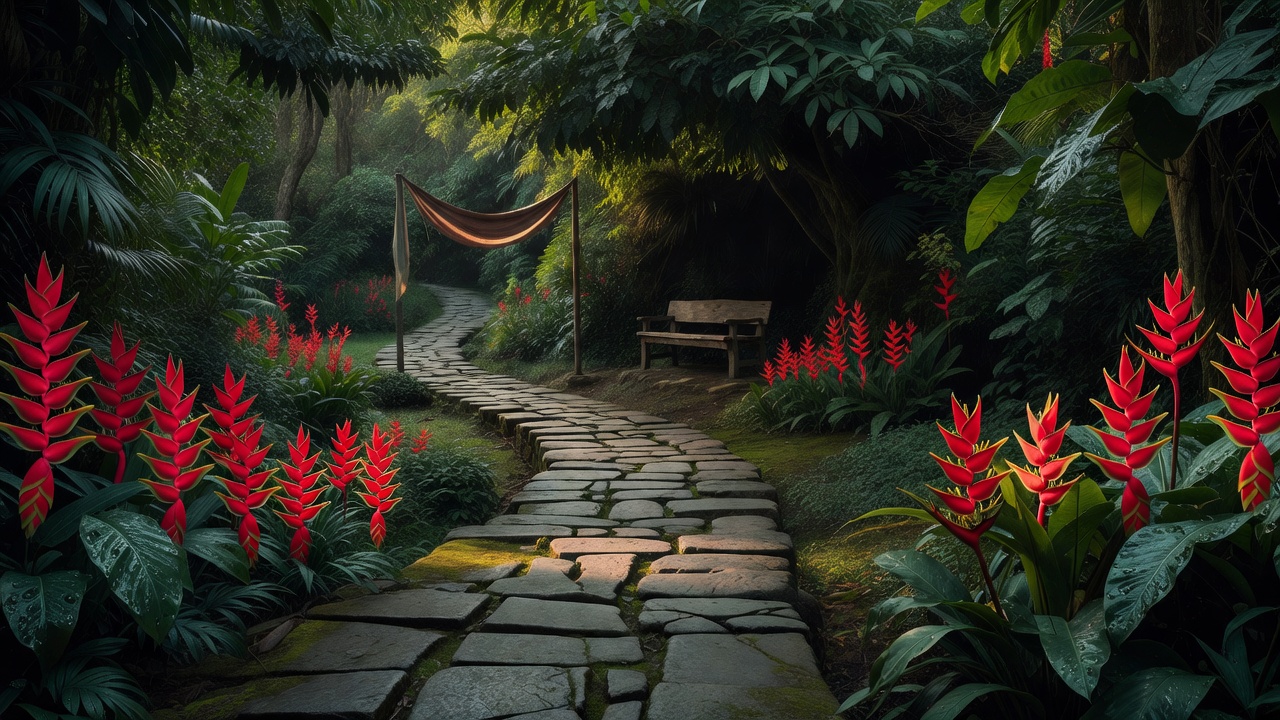
Forced perspective: making distance
The best-known architectural example sits not in a garden but in a palace courtyard: Francesco Borromini's colonnade at the Palazzo Spada in Rome, around nine metres long, appears roughly four times deeper thanks to a shrinking floor, rising pavement and diminishing columns. The same tricks scale down beautifully outdoors.
Taper the path so it is wider at the entry than at the far end. Plant large-leaved species, such as Alocasia or banana, near the viewer and finer-textured plants, like ferns and Rhapis palms, toward the end. Reduce the size of paving units and ornaments as they recede. The eye reads these cues as distance.
The effect works from one direction only. Walking back, the path may look oddly short. That reversal can be part of the delight, provided the experience in both directions is comfortable.
Patterned paving and moving lines
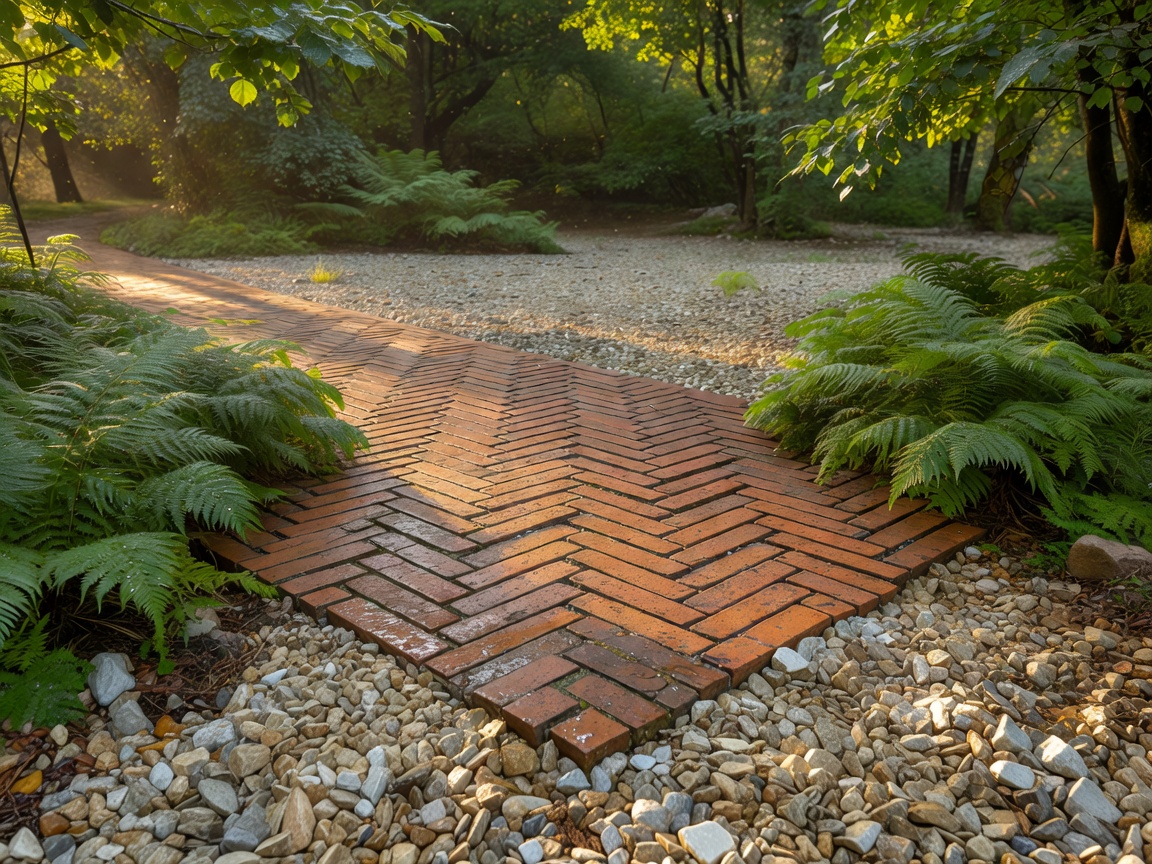
Paving pattern changes how a route feels underfoot and to the eye. Stripes laid across the path slow walkers and make it feel wider; stripes laid lengthwise speed the eye and lengthen it. Checkerboards invite a hopscotch rhythm, while chevrons point the way.
Burle Marx's black, white and red stone mosaics along Copacabana show how a simple undulating band can make a long walk feel lively. For a home path, consider a single wave of darker stone inset into lighter gravel, or a non-repeating tiling inspired by Roger Penrose's aperiodic patterns, which seem to almost repeat yet never quite do.
Use illusion where people stroll, not where they must concentrate. Never place a three-dimensional "cube" pattern, which can read as a step, near real steps or slopes.
Bends, concealment and borrowed views
A path that disappears behind a clump of bananas suggests the garden continues further than it does. The Sri Lankan architect Geoffrey Bawa spent decades shaping his estate at Lunuganga around this idea: terraces, hidden steps and framed glimpses of the lake that are revealed only as you move. His brother Bevis Bawa's Brief Garden nearby offers a more whimsical counterpart.
At home, a single bend at roughly two-thirds of the route is enough. Plant a dense screen on the inside of the curve and leave a narrow window in the foliage where a glimpse of the next space, a sculpture or a coloured wall, can be seen. That window is your puzzle: what is beyond it, and how do I get there?
Mystery in a garden is mostly a question of where you put the leaves.
Maintaining the effect
Illusions decay quietly. A screen grows thin at the base, a window closes, a tapering planting fills to the same size along its length. Note the intended size of each plant on your plan and prune to it.
- Scrub algae from shaded stones
- Clear drainage gaps
- Thin banana suckers
- Re-level settled pavers
- Top up gravel to the edging
- Re-open view windows